

Call Us
0086-592-6510772Email Us
sunny@qqsmould.com

Call Us
0086-592-6510772Email Us
sunny@qqsmould.com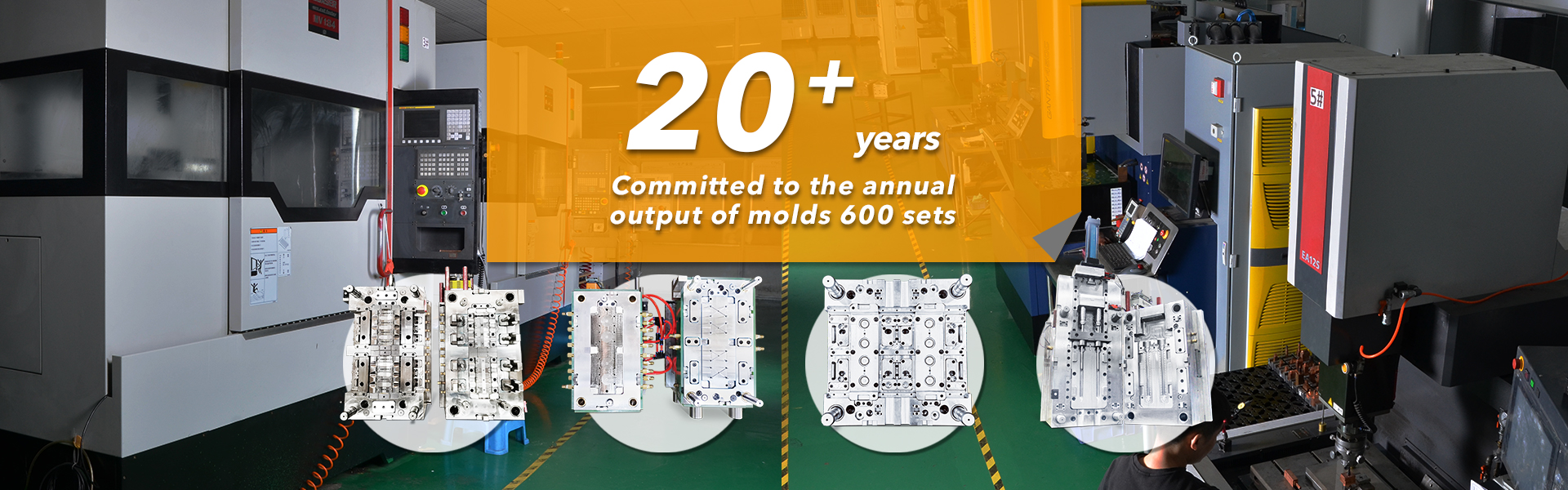
The automotive sector enforces some of the most unforgiving quality benchmarks in global manufacturing. With the rapid evolution of electric vehicles (EVs) and smart mobility, Tier-1 suppliers face intense pressure to lightweight vehicles while enhancing structural integrity. Replacing heavy cast alloys with engineered polymers has made plastic injection molding the cornerstone of modern automotive architecture.
However, moving from a rigid metal component to a high-performance plastic assembly introduces complex manufacturing variables. At Xiamen Qiqiangsheng Intelligent Technology Co., Ltd. (QQS), we navigate these challenges daily, specializing in the design and execution of complex, multi-material automotive overmolding molds and high-precision structural components.
Here is a technical breakdown of how our engineering facility solves the critical bottlenecks associated with high-durability automotive tooling.
Overmolding—the process of injecting a soft-touch elastomer or secondary polymer onto a rigid plastic or metal substrate—is vital for automotive applications. It is widely used to create watertight seals for electronic housings, vibration-dampening brackets under the hood, and premium multi-material interior control interfaces.
The primary engineering failure point in automotive overmolding is material bleeding and poor interfacial bonding. If the mold tolerances deviate by even 0.01mm to 0.02mm, the pressurized secondary plastic will escape the parting line, creating cosmetic flash or ruining the seal's function.
To guarantee zero-defect execution, our engineering team focuses heavily on:
Intense Volumetric Shrinkage Analysis: Different polymers cool and shrink at radically different rates. We use advanced Moldflow simulations to predict the thermal contraction of the substrate before designing the secondary overmolding cavity, ensuring a flawless mechanical lock.
Precision Core Shut-offs: We design custom spring-loaded sliders and mechanical shut-offs within the tool to securely clamp the substrate, preventing it from shifting under the immense pressure of the second injection cycle.
Automotive structural components must maintain absolute dimensional stability under continuous mechanical vibration and extreme temperature fluctuations. This requires a tooling facility equipped with world-class machinery capable of holding micron-level tolerances over high-volume production lifetimes.
To meet these elite quality standards, the QQS tool shop relies on advanced, high-precision assets, including our state-of-the-art GF Mikron MILL P 900 CNC machinery.
