


6DoF AR Glasses Product Development: Precision Engineering & OEM/ODM Manufacturing
Developing Complex AR Hardware for Real-World Applications
Developing professional AR glasses involves much more than integrating cameras and displays into a wearable frame. It requires careful coordination between optical components, mechanical structures, electronic systems, thermal management and user ergonomics.
QQS's 6DoF Spatial Computing AR Glasses project demonstrates an integrated hardware platform designed around these engineering requirements.
Unlike conventional lightweight audio glasses, spatial computing glasses need to accommodate multiple cameras, motion sensors, optical modules and high-performance computing hardware while maintaining structural stability and wearing comfort.
The project adopts a split architecture, separating the main computing and battery components from the glasses. This approach provides greater flexibility in mechanical design, weight distribution and thermal management.
For product developers and brand owners, it also creates opportunities to adapt the hardware structure to different professional applications and product positioning.
Key Engineering Considerations in AR Glasses Development
1. Compact Mechanical Structure & Component Integration
AR glasses have limited internal space, making mechanical design and component arrangement particularly challenging.
Optical modules, cameras, sensors, speakers and electronic components must be positioned accurately within a compact wearable structure.
Engineering considerations include:
Mechanical layout and component positioning
Structural strength and dimensional accuracy
Lightweight housing and ergonomic design
Optical module support and alignment
Assembly tolerances and serviceability
QQS's experience in precision plastic mold design and injection molding supports the development of customized housings, internal structural components and precision plastic parts for wearable electronic devices.
2. Precision Plastic Tooling for Smart Eyewear
The plastic housing and structural components of AR glasses require careful attention to dimensional consistency, appearance and assembly accuracy.
Depending on the product design, injection-molded components may include:
Front and rear frame housings
Optical module supports
Camera and sensor mounting structures
Computing unit enclosures
Internal brackets and protective covers
Our mold engineering team focuses on DFM evaluation, mold structure optimization, dimensional control and process validation to support stable component production.
For complex wearable products, tooling design should consider not only individual part quality but also the assembly relationship between multiple components.
3. Optical & Electronic Integration
Optical performance and electronic integration are closely connected to the overall mechanical structure.
This AR glasses platform uses Micro OLED displays and Birdbath optics, together with dual fisheye cameras, an RGB camera and an IMU-based tracking system.
During product customization, key engineering considerations include:
Optical module positioning and mechanical fixation
Camera and sensor mounting accuracy
Electronic component layout
Cable routing and internal space optimization
Interface and power management integration
QQS can coordinate mechanical and electronic integration with relevant technology partners according to the project scope and technical requirements.
4. Thermal Management & Split Computing Design
High-performance AR hardware generates heat through its processor, battery and electronic components.
The split computing architecture used in this project places the main processing system and battery in an external computing unit rather than inside the glasses.
This design creates additional flexibility in:
Product weight distribution
Internal space allocation
Cooling airflow design
Battery positioning
Computing unit enclosure development
Mounting and carrying configurations
The mechanical design of the glasses and external computing unit must be considered together to achieve a practical and reliable product structure.
5. Product Assembly & Manufacturing Validation
A successful AR product requires more than well-manufactured plastic components.
The integration of optical modules, electronic boards, cameras, sensors and mechanical structures must be carefully controlled throughout assembly and validation.
QQS supports manufacturing processes including:
Precision mold manufacturing and injection molding
Component inspection and dimensional verification
PCBA/SMT and electronics integration
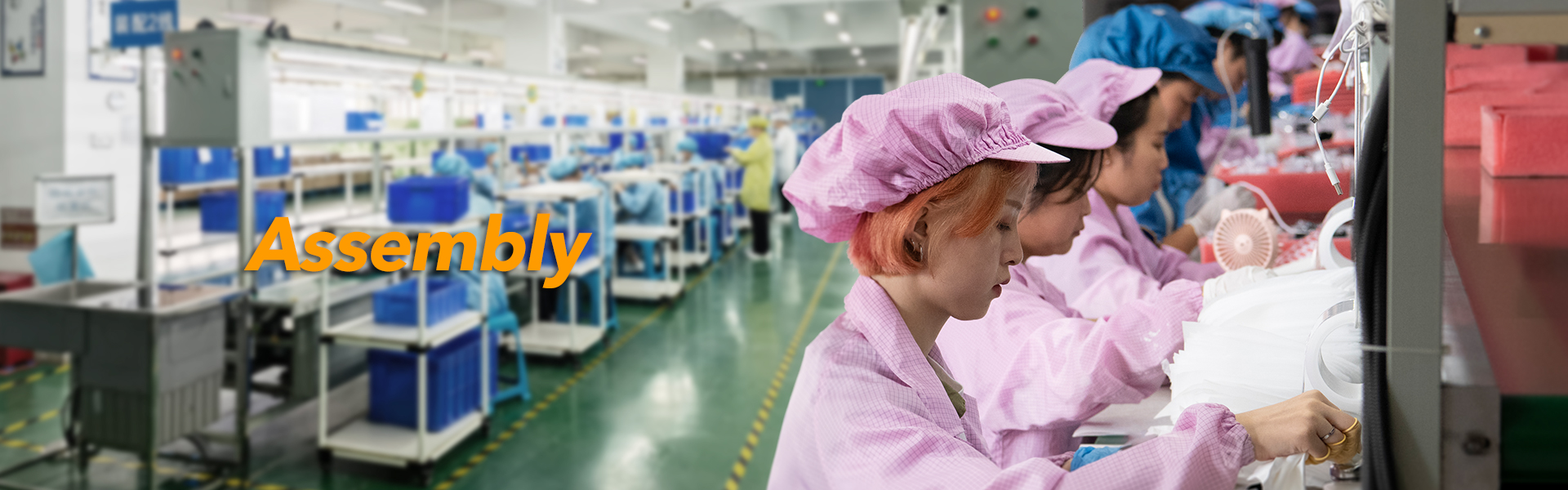
Mechanical and electronic assembly
Functional testing and process validation
Production quality control and mass manufacturing
From AR Hardware Concept to OEM/ODM Manufacturing
For companies developing customized AR glasses, QQS offers integrated engineering and manufacturing support based on project requirements.
Our development and manufacturing capabilities include:
Mechanical Engineering & DFM
Evaluate product structures, component arrangements, material selection and manufacturing feasibility before tooling investment.
Precision Mold Development
Design and manufacture customized injection molds for wearable housings, internal structural parts and electronic enclosures.
Plastic Component Manufacturing
Provide injection-molded components with controlled dimensions, appearance and assembly consistency.
Electronics & Product Integration
Coordinate PCBA manufacturing, component integration, product assembly and functional testing.
Prototype Validation & Mass Production
Support tooling trials, engineering validation, production preparation and manufacturing scale-up.
Optical modules, tracking systems and software integration can be evaluated and coordinated with appropriate technology partners according to the project scope.
Customized AR Glasses Manufacturing Solutions
The 6DoF platform is one example of QQS's broader smart eyewear development portfolio.
Depending on the application and target market, customers may explore different product configurations, including:
AI smart glasses with cameras and voice interaction
Audio smart glasses for everyday communication
AR display glasses with Micro OLED technology
6DoF spatial computing glasses for professional applications
Our engineering team can evaluate different mechanical structures, plastic materials, optical configurations and electronic integration requirements to support customized OEM/ODM development.
Why Work with QQS?
With experience in precision tooling, plastic injection molding and integrated product manufacturing, QQS helps customers bridge the gap between product design and scalable production.
Our strengths include:
In-house precision mold design and manufacturing
Plastic injection molding and complex component engineering
Mechanical and electronic integration
Flexible OEM/ODM project support
Coordinated manufacturing from development to mass production
Whether you are developing a new smart eyewear concept or looking for a manufacturing partner to optimize an existing AR product, QQS can support your project with practical engineering and manufacturing solutions.
Develop Your Next Smart Eyewear Project with QQS.
Contact our team to discuss your AR glasses design, tooling requirements and OEM/ODM manufacturing plans.
From Concept to Mass Production.
